Assistive and Medical Robotics
Overview
Medical and assistive robotics research is at the forefront of integrating advanced robotics, imaging, and computational modeling with medical applications. We focus on three primary research directions: teleoperated robotic ultrasound examinations, autonomous robotic palpation for cancer detection, and patient-specific digital twins with 3D reconstruction. Our goal is to enhance the precision, safety, and personalization of medical procedures through cutting-edge robotic and modeling technologies.
Teleoperated Robotic Ultrasound Examinations
Teleoperated robotic ultrasound systems allow medical professionals to perform ultrasound examinations remotely. This technology is particularly beneficial in scenarios where access to specialized medical expertise is limited. Our research aims to:
- Develop intuitive teleoperation interfaces for seamless control.
- Ensure high-fidelity image acquisition and real-time feedback.
- Enhance the safety and reliability of remote ultrasound procedures.
Autonomous Robotic Palpation for Cancer Detection
Early detection of cancer can significantly improve treatment outcomes. Our robotized palpation system is designed to assist in the early detection of tumors through precise and consistent palpation techniques. Key features of our research include:
- Advanced algorithms for tissue viscoelastic characterization.
- Integration with collaborative robotic arms for safe and effective palpation.
- Development of silicone phantoms to mimic human tissues for testing and validation.
Patient Digital Twin and 3D Reconstruction
Patient digital twins aim to create accurate, patient-specific virtual representations of anatomical structures by combining medical imaging, robotic sensing, and computational modeling. These models support personalized diagnosis, planning, and robotic intervention. Our research activities include:
- 3D reconstruction of soft tissues and organs from multimodal imaging data (e.g., cameras, CT, ultrasound).
- Fusion of robotic haptic sensing, imaging, and biomechanical models to build patient-specific digital twins.
- Real-time model updating based on intra-procedural data and robotic interaction.
- Use of digital twins to procedure planning, simulation, and decision support in medical robotics.
The Team
Our interdisciplinary team comprises experts in robotics, estimation, and artificial intelligence. We collaborate closely with medical professionals to ensure our solutions meet clinical needs and standards.
- Edoardo Lamon - Research Leader
- Luca Beber - PhD Student
- Davide Nardi - PhD Student
- Antonella Rech - PhD Student
Publications and Events
We actively participate in leading international conferences and publish our research in top-tier journals. Recent highlights include:
- Journal paper published in IEEE Robotics and Automation Letters, to be presented at IEEE ICRA 2026 – Vienna.
- Winner of the Best Paper on Surgical Robot award, with paper presentations at IRIM 2025 (Italian news article).
- Paper presentation at the Hamlyn Symposium on Medical Robotics 2025.
- Research activity presentation at HFR 2025.
- Paper presentations at ILUS 2025.
- Journal paper published in IEEE Transactions on Instrumentation and Measurement.
- Conference paper presented at IEEE IROS 2024 – Abu Dhabi (post).
- Paper presentations at IRIM 2024.
- Conference paper presented at IEEE ICRA 2024 – Yokohama.
For detailed information on our research and publications, visit our publications page.
Contact Us
For more information about our research or to collaborate with us, please contact edoardo.lamon@unitn.it. We look forward to advancing the field of medical robotics together!
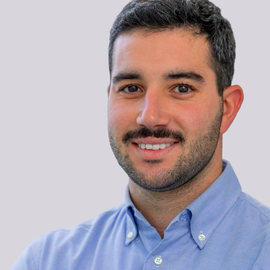
Edoardo Lamon
Assistant Professor (RTD-A) of Collaborative and Medical Robotics
Passionate researcher in human-robot interaction with applications to healthcare and manufacturing.

Matteo Saveriano
Associate Professor
My research attempts to integrate cognitive robots into smart factories and social environments through the embodiment of AI solutions, inspired by the human behavior, into robotic devices.

Daniele Fontanelli
Full Professor of Measurements and Robotics
Passionate researcher in distributed measurements for robotics application in the field of manufacturing, healthcare and agrifood.
Luigi Palopoli
Full Professor in Robotics
Researcher in the application of AI to social and rehabilitation robotics